Shop for a replacement engine for more than five minutes and you'll run into three labels: short block, long block and complete engine. They sound like sizes. They're not. Each one describes how much of the engine you're actually buying, and that decides how much work your shop has to do, how much you pay, and what you need to save from your old engine.
The catch is that none of these terms has a legal or industry-standard definition. Two sellers can call very different units a "long block." This guide explains what each term usually means, how it plays out with used engines, and the exact questions to ask so there are no surprises when the pallet shows up.
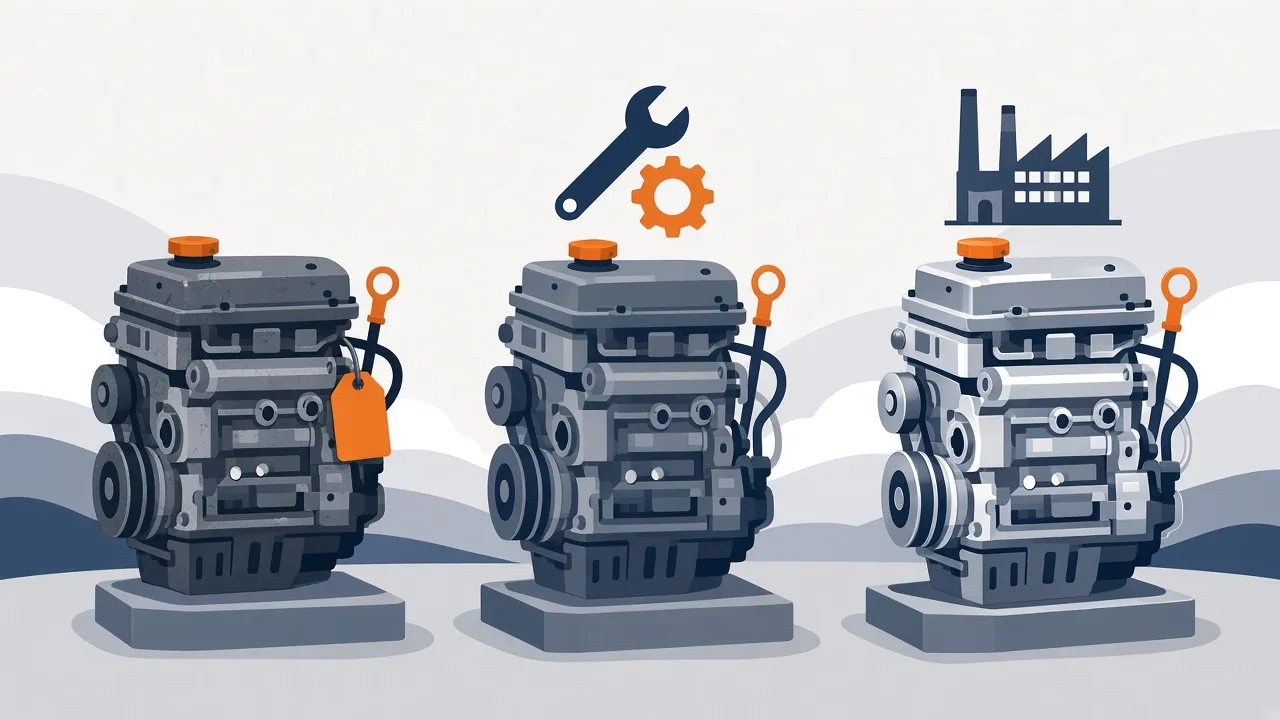
The Short Version
- Short block: the bottom half of the engine. Block, crankshaft, connecting rods, pistons and bearings. No cylinder heads.
- Long block: a short block with the cylinder heads, camshaft(s) and valvetrain installed. All the internal moving parts, but few or no external parts.
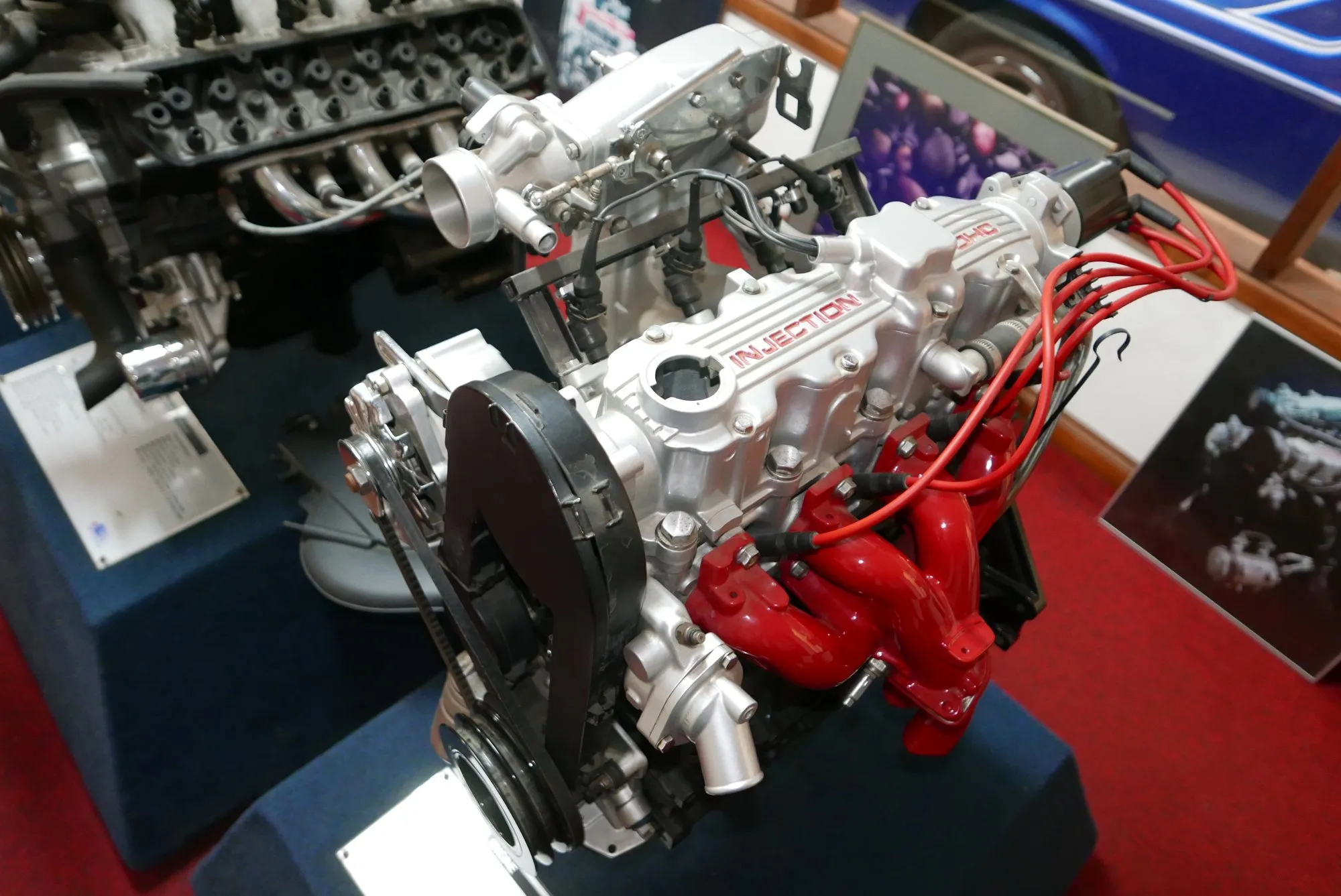
- Complete engine: a long block with some or most of the external parts still attached, such as the intake manifold, fuel rail, sensors, alternator and exhaust manifolds. Also called "dressed," "drop-in" or "fan-to-flywheel."
If you remember one thing, make it this: the label tells you the category, not the parts list. Always ask what's physically attached to the unit you're buying.
What Is a Short Block?
A short block is the foundation of the engine. It typically includes:
- The engine block (cylinders and main bearing bores)
- Crankshaft and main bearings
- Connecting rods and rod bearings
- Pistons and piston rings
Depending on the engine design and the seller, a short block may also come with the oil pump, timing set, oil pan or front cover installed. On pushrod (overhead valve) engines like GM's small-block V8s, the camshaft lives in the block, so a short block for those engines often includes the cam. On overhead cam engines, which is most modern four- and six-cylinder engines, the cams sit in the cylinder heads and are not part of the short block.
When a short block makes sense
Short blocks are mainly a rebuild-shop product. They make sense when:
- The bottom end failed (spun bearing, thrown rod, scored cylinder) but the cylinder heads are known to be good
- You or your shop want to keep a set of heads that were recently rebuilt or upgraded
- You're building a performance engine and want a specific bottom end
The trade-off is labor. Your old heads have to come off, get inspected (often machined), and go back on with new gaskets, head bolts and timing components. If the heads turn out to be cracked or warped, the savings disappear fast.
You'll rarely see used short blocks from salvage suppliers. Most used engines are pulled from a donor vehicle as an assembled unit, so they ship as a long block or more.
What Is a Long Block?
A long block is the short block plus the top end:
- Cylinder head or heads, fully assembled with valves, springs and retainers
- Camshaft(s), lifters or followers, rockers
- Head gaskets
- Usually the timing components (chain or belt, guides, tensioner)
Many long blocks also include the valve covers, oil pan and timing cover, since those seal the engine. What usually isn't included: the intake manifold, fuel injectors and rail, ignition coils, sensors, wiring harness, exhaust manifolds, water pump and front accessories.
Think of a long block as a sealed mechanical engine. It has every internal moving part, and your shop moves the outside parts over from your old engine.
When a long block makes sense
A long block is the most common choice for a straightforward engine replacement, because:
- It replaces every internal wear part at once, top and bottom
- You avoid the risk of reusing old heads that may have overheated
- Your vehicle's own sensors, intake and accessories go back on, so the parts that talk to your computer are the ones built for your exact vehicle
The extra work is transferring those external parts, which is normal engine-swap labor. Your shop will want to know before they quote the job.
What Is a Complete Engine?
A complete engine is a long block with external components still attached. That might be:
- Intake manifold and throttle body
- Fuel rail and injectors
- Ignition coils and spark plugs
- Exhaust manifolds, and on turbo engines, possibly the turbocharger
- Sensors and part of the engine wiring harness
- Alternator, A/C compressor, power steering pump and brackets
- Water pump, thermostat housing and pulleys
"Complete" is the most loosely used of the three terms. One seller's complete engine might be a long block with an intake manifold. Another's might be close to turn-key. With used engines in particular, what's attached depends on how the engine was pulled from the donor vehicle and what was removed afterward.
When a complete engine makes sense
- Your old engine's external parts were damaged (a fire, a collision or a catastrophic failure that took out the intake or accessories)
- You want to cut installation time and labor cost
- Your old external parts are worn enough that you'd replace them anyway
Even with a complete engine, expect your shop to reuse some of your original parts, such as the engine computer, the main wiring harness, motor mounts and the flywheel or flexplate.
Side-by-Side Comparison
| Short block | Long block | Complete engine | |
|---|---|---|---|
| Cylinder heads included | No | Yes | Yes |
| Valvetrain included | Cam only on some pushrod engines | Yes | Yes |
| Intake, fuel and ignition parts | No | Usually no | Often, varies by unit |
| Accessories (alternator, A/C, pumps) | No | No | Sometimes |
| Parts moved from your old engine | Heads plus everything external | External parts | Fewest, but still some |
| Install labor | Highest | Moderate | Lowest |
| Typical buyer | Rebuild shops, performance builds | Most engine replacements | Damaged externals, faster turnaround |
How These Terms Apply to Used Engines
Most rebuilders and crate engine companies sell short blocks and long blocks built to a set spec. Used engines are different. They come out of donor vehicles, and what's on them when they leave the yard varies from unit to unit.
That's why a listing for a used engine generally focuses on fitment first: year, make, model, engine size and option code, plus donor mileage and grade. Those details decide whether the engine is right for your vehicle. What's bolted to it decides how much your shop has to transfer, so ask about that separately.
If you're still deciding between used and other options, our guide on used vs rebuilt vs remanufactured engines explains how those categories differ in testing and warranty.
Why your old external parts often matter
Here's something many buyers don't expect. Even when the replacement engine has its own intake, sensors and harness attached, your shop may still use the ones from your old engine. Engines that share a size and code can differ in sensor types, connectors and emissions equipment from one model year or trim to the next. Moving your original parts over keeps everything matched to your vehicle's computer and wiring.
Some real examples from the kind of engines buyers search for:
- GM 5.3L V8 trucks. A 2020 GMC Sierra 1500 5.3L engine is listed with the option code L84. That version uses GM's Dynamic Fuel Management cylinder deactivation, so its lifters and related controls aren't the same as older 5.3L versions. Matching the option code matters more than matching the displacement. Browse used GMC Sierra 1500 engines by year and option.
- Subaru boxer engines. Subaru's flat-four has two cylinder heads, one on each side. That makes top-end work more labor-intensive than on an inline engine, which is one reason Subaru owners often weigh a long block against repairing heads. A 2006 Subaru Outback 2.5L engine arrives with both heads already on, so the top end isn't a separate job. See all used Subaru Outback engines.
- Turbocharged engines. On turbo engines like the 2.3L in late-model Ford Mustangs, ask specifically whether the turbocharger, intercooler piping and oil feed lines are on the unit. Turbos are expensive, and you'll want to know whether you're reusing yours.
Questions to Ask Before You Buy
Use this list whenever you get a quote, whatever the seller calls the engine:
- What is physically attached to this unit? Ask for a list, or photos of the actual engine. Intake, injectors, coils, exhaust manifolds, turbo, accessories, harness, flywheel or flexplate.
- Does it fit my VIN? Give the seller your full VIN and confirm the engine code. Our guide on how to match a used engine to your car walks through where to find it.
- What will my shop need to transfer? Share the parts list with your mechanic before you order so the labor quote is accurate.
- What does the warranty cover? Check whether coverage applies to the internal engine only or also to attached accessories.
- What's the donor mileage and grade? Mileage matters more than the label. See how many miles is good for a used engine.
- How will it ship? Engines ship by freight, and delivery terms differ for business and home addresses.
For a broader pre-purchase checklist, read what to look for when buying a used engine.
Warranty: Why "What's Attached" and "What's Covered" Aren't the Same
A lot of buyers assume that if a part came attached to the engine, it's covered with the engine. Usually not.
At State Auto Parts, the 2-year limited warranty covers the core assembly and its internal mechanical parts, such as the block, crankshaft, pistons and camshaft. It specifically excludes bolt-on accessories, wiring, sensors, hoses, belts and other peripheral components. So on a complete engine, the alternator, sensors or harness pieces that come along for the ride aren't what the warranty protects. The long block is.
A few other warranty terms matter for this decision:
- Install within 10 business days of delivery. Plan the job before you order, especially if the shop needs time to move external parts.
- Don't take it apart. Units that have been disassembled, opened or tampered with aren't eligible for warranty coverage or a return. Moving bolt-on external parts is normal installation work. Pulling a cylinder head or oil pan "just to look" is not. If your vehicle needs a part swapped that means opening the engine, like a different oil pan for clearance, ask in writing before your shop does it.
- Keep maintenance records. Fluid and filter changes on the recommended schedule may be requested if you file a claim.
- Labor isn't covered. Removal, reinstallation and diagnostic time aren't reimbursed, which is another reason to get the fitment and parts list right the first time.
The refund and return policy adds that returns need prior written authorization within 30 days and the engine has to be in the same assembled condition it arrived in.
Shipping and Delivery Tips
Whatever type you buy, engines ship as freight. According to the shipping policy:
- Shipping is free to commercial addresses in the lower 48 states, and having it delivered to your repair shop is usually easiest
- A $250 residential delivery fee applies to home addresses
- A liftgate is available at no extra charge if you request it at checkout
- No core deposit is required, and you don't have to send your old engine back
Inspect the engine before you sign the freight bill. Note any visible damage with the driver right then.
So Which One Should You Buy?
- Choose a short block if only the bottom end failed, your heads are confirmed good, and you're working with a rebuild shop.
- Choose a long block for most engine replacements. You get every internal moving part, and your vehicle's own sensors and accessories go back on.
- Choose a complete engine if your external parts are damaged or worn out, or if cutting install labor matters more than the purchase price.
For most drivers replacing a failed engine with a used one, the real decision isn't the label. It's matching the right engine code, knowing what's attached, and understanding what the warranty covers. Get those three things in writing, share them with your mechanic, and you'll know exactly what you're paying for.
Have a VIN handy and want to know what comes with a specific unit? Call State Auto Parts at (800) 241-8053 before you order.