There's no single magic number. A good mileage for a used engine is one that makes sense for the donor vehicle's age and is backed up by its history, test results and warranty. A 60,000-mile engine from a well-kept daily driver can be a better buy than a 25,000-mile engine that sat in a flooded lot.
That said, you still need a way to judge the number on the listing. This guide gives you a simple yardstick based on federal driving data, shows how to apply it to real listings, and explains when higher or lower mileage should change your decision.
The quick answer
- Use the donor's age as your starting point. U.S. light-duty vehicles averaged about 11,100 miles in 2023, according to the Federal Highway Administration.
- Mileage close to that pace for the donor's model year is normal. Lower is a bonus if the rest of the story checks out.
- Mileage well above that pace isn't automatically bad, but it should come with a lower price, good test results and solid warranty coverage.
- Mileage that seems far too low for the engine's age deserves questions, not excitement.
- Whatever the number, match the engine to your VIN, ask about donor history, and read the warranty before you pay.
The yardstick: average miles per year
The Federal Highway Administration's Highway Statistics Table VM-1 for 2023 puts average travel at 11,106 miles per light-duty vehicle for the year. Broken down further, shorter-wheelbase vehicles (most cars, crossovers and smaller SUVs) averaged 11,026 miles, and longer-wheelbase vehicles (full-size pickups, vans and large SUVs) averaged 11,360 miles.
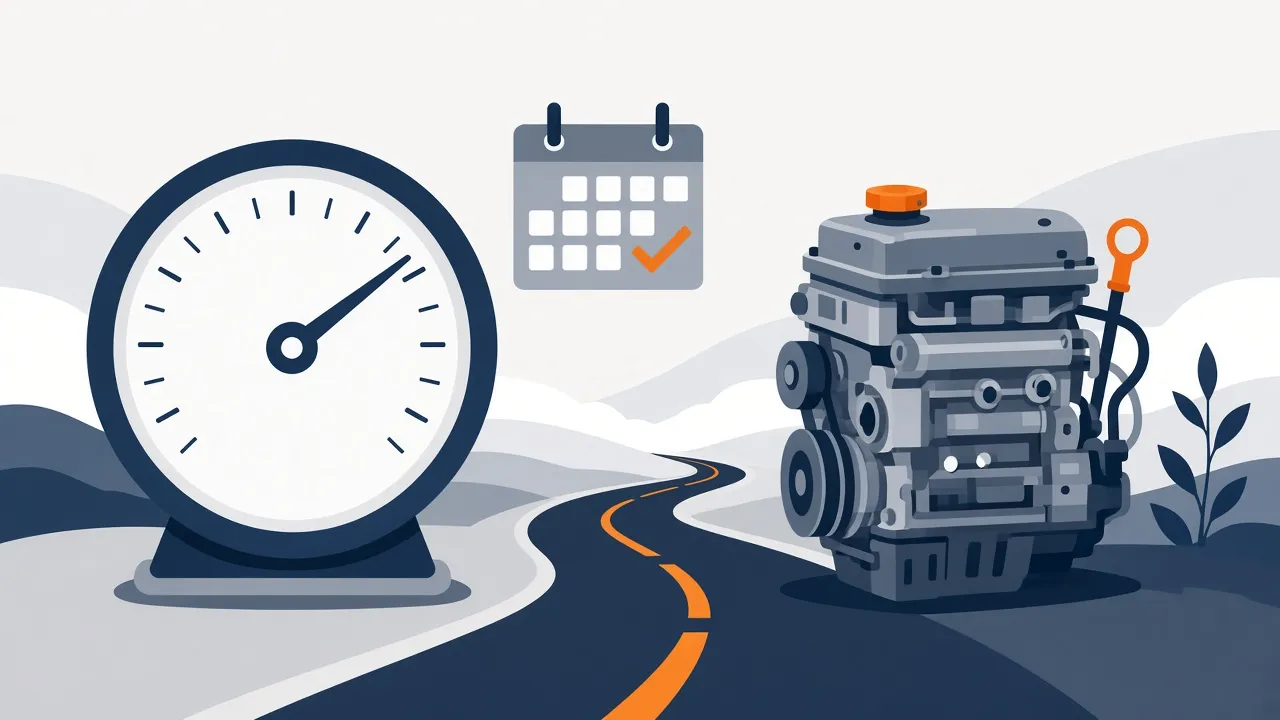
That gives you a simple way to sanity-check a listing. Multiply the donor's age by roughly 11,000 miles and you have an "average pace" estimate.
| Donor model year | Approx. age in 2026 | Average-pace miles (about 11,000 a year) |
|---|---|---|
| 2024 | 2 years | about 22,000 |
| 2022 | 4 years | about 44,000 |
| 2020 | 6 years | about 66,000 |
| 2018 | 8 years | about 88,000 |
| 2016 | 10 years | about 110,000 |
| 2012 | 14 years | about 154,000 |
| 2008 | 18 years | about 198,000 |
This is a national average across a huge mix of vehicles and drivers, so use it as a reasonableness check, not a prediction. Work trucks and long-distance commuters run well above it. Weekend cars and second vehicles run below it.
Applying it to real listings
Here's how the yardstick works on a few engines currently listed on our site. Each listing shows a mileage range from the donor vehicle.
- A 2023 Honda Civic 1.5L engine with about 35,000 to 41,000 miles. At roughly three years old, average pace would be around 33,000 miles. This one is right in line with normal use.
- A 2022 Nissan Altima 2.5L engine with about 47,000 to 54,000 miles. At about four years old, that's a little above average pace, which is common for a commuter sedan.
- A 2010 Toyota Highlander engine with about 50,000 to 58,000 miles. Average pace for a 16-year-old vehicle would be around 176,000 miles, so this is far below average, a genuinely low-mileage find for its age.
- A 2008 Toyota Prius engine with about 44,000 to 51,000 miles. That's well under the roughly 198,000 average-pace figure for an 18-year-old car.
Engines like the last two are exactly where the next section matters. Very low mileage on an older engine can be a great value, but age still affects rubber seals, gaskets and hoses, and you want to know how the engine was stored. Ask questions, check the grade, and lean on the warranty.
Why mileage isn't the whole story
Mileage counts how far the engine traveled. It doesn't tell you how it was treated along the way. These factors can matter as much or more:
- Maintenance: regular oil changes are what keep bearings, timing chains and variable valve timing parts healthy. An engine that went 10,000 miles between oil changes for years can be more worn at 60,000 miles than a well-serviced one at 100,000.
- How the donor was retired: an engine from a car totaled in a rear or side collision was usually running fine. A flood car or a vehicle retired for mechanical trouble is a different story.
- Overheating history: one serious overheat can warp a head or damage a gasket regardless of mileage.
- Storage after removal: an engine sitting outdoors or in an unheated space for a long time can pick up moisture and dried-out seals.
- Driving style and use: towing, short trips in cold weather and hard driving all add wear that the odometer doesn't show.
- Engine design: some engine families are known for durability and others for specific weak points. The same mileage can mean different things on different designs, so research your specific engine code.
When low mileage deserves a second look
Low mileage feels like a sure thing, but a number that's far too low for the vehicle's age is worth checking:
- Ask how the mileage was recorded. Most sellers take it from the donor's odometer or records, and it's typically stated to the best of their knowledge rather than guaranteed. Our own policy says mileage is not guaranteed.
- Ask why a low-mileage vehicle was parted out. A clean answer (collision, theft recovery) is reassuring. Vague answers are not.
- Ask about storage and testing. Compression or leak-down results and the condition grade tell you more than the odometer.
- Factor in age. Even a low-mileage engine from 2008 has gaskets and seals that are 18 years old. Budget for fresh seals, belts and hoses where needed during installation.
When high mileage can still be a smart buy
A higher-mileage engine can be the right call when:
- The vehicle it's going into is older and you need a few more good years, not a decade.
- The price difference is significant compared with a lower-mileage unit.
- Test results are good and the cylinders read evenly.
- The engine design has a strong reputation at higher mileage.
- The warranty gives you enough time to find any problem. Our 2-year limited warranty covers internal parts of the core engine, with conditions like installation within 10 business days and normal maintenance.
It's usually a poorer fit when the engine family has known issues that show up with age, when there's no donor history at all, or when the price isn't much lower than a lower-mileage alternative.
Mileage and price: comparing listings fairly
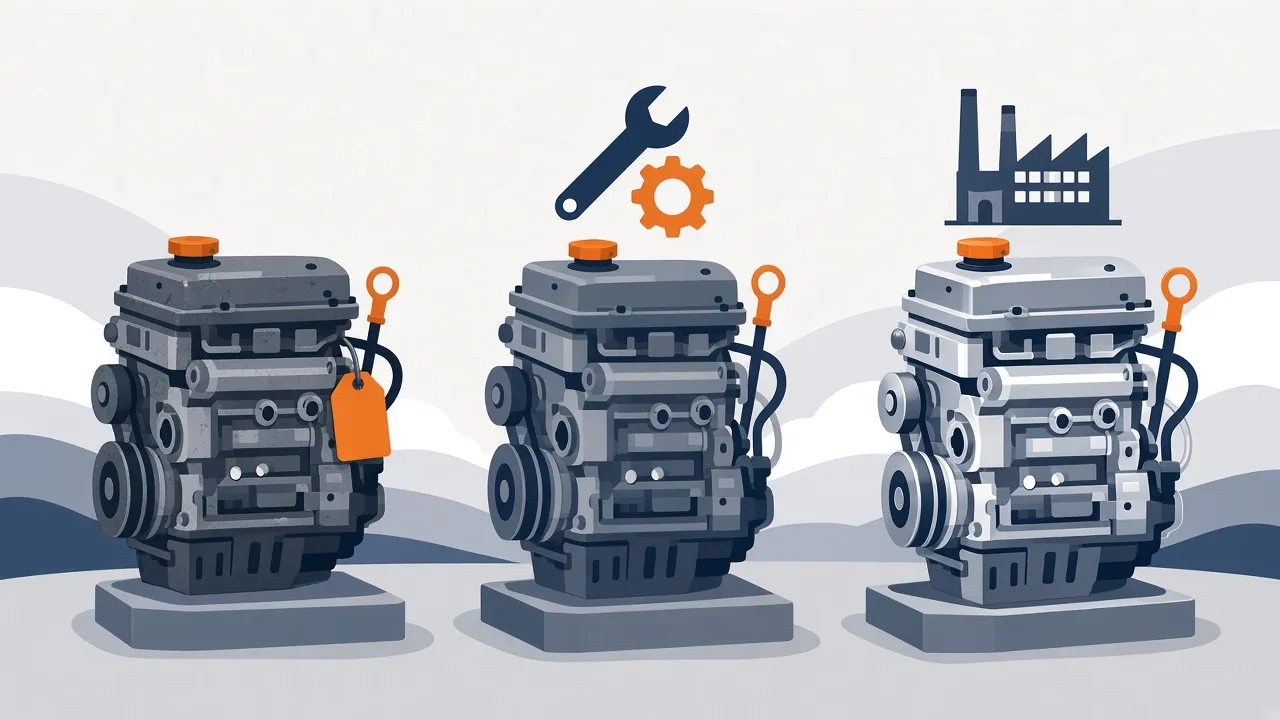
On most used-engine sites, mileage, condition grade and price move together. On our model pages you'll often see the same engine in Grade A and Grade B at different mileage ranges and prices. For example, our used Toyota Corolla engines page lists units with their mileage range, grade and price side by side.
When comparing, keep the comparison apples to apples:
- Same engine code. A cheaper engine that doesn't match your VIN isn't a deal.
- Same contents. Long block versus complete engine, and which accessories are included.
- Same delivery terms. Free commercial delivery versus residential fees, liftgate and freight to your area.
- Same warranty. Length, what's covered, labor exclusions and install deadlines.
Then ask yourself whether the lower-mileage option is worth the extra cost for how long you plan to keep the vehicle.
What mileage should you look for?
A practical rule that works for most buyers:
- If the vehicle is newer and you plan to keep it for years, prefer an engine at or below average pace for its age, with a good grade.
- If the vehicle is older or you're keeping it for a shorter time, above-average mileage at a lower price can be fine if the history, tests and warranty are solid.
- If the mileage seems too good to be true for the engine's age, ask how it was verified and why the donor was parted out before you pay a premium.
And regardless of the number, match by VIN. Our guide on how to match a used engine to your car using the VIN and engine code walks through it step by step.
Ready to compare engines?
Browse all used engines for sale. Each listing shows the engine option code, donor mileage range, condition grade and price. Commercial delivery is free in the continental U.S. (see our shipping policy). If you'd like help weighing a lower-mileage engine against a better-priced one, call (800) 241-8053 with your VIN.
Shopping for a transmission too? The same thinking applies, and our guide on how to check a used transmission before you buy covers what to look for.