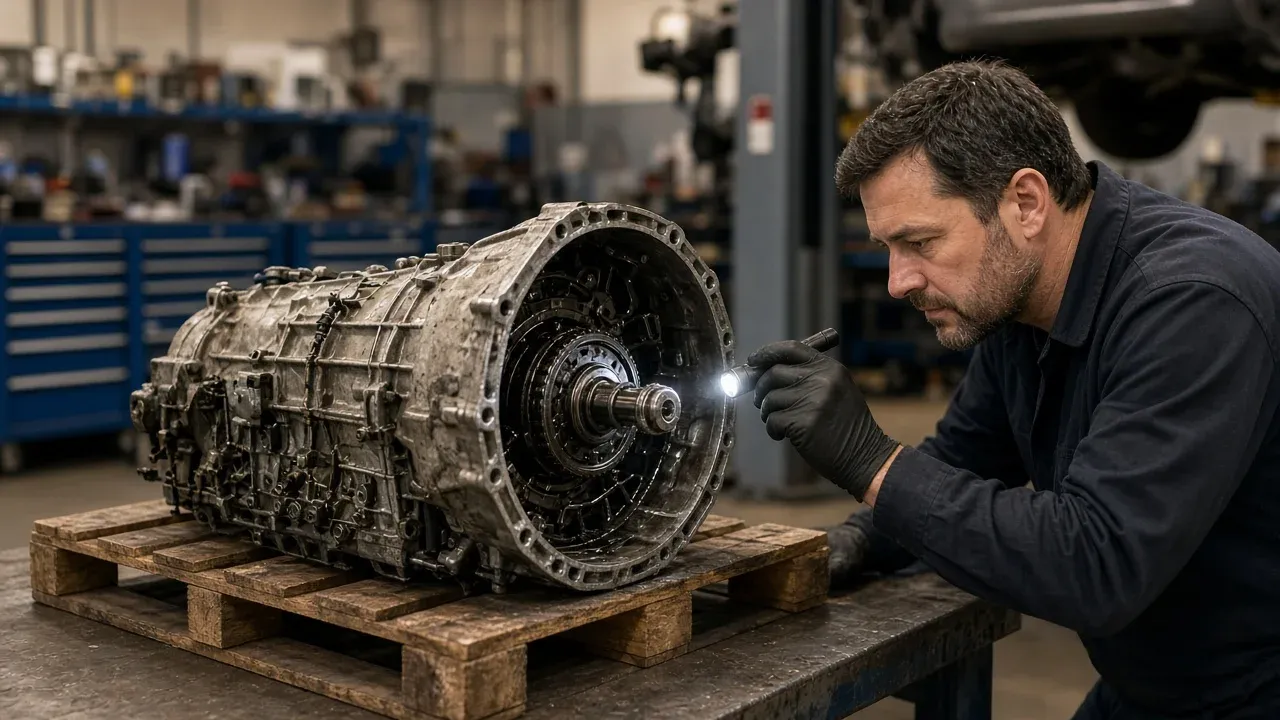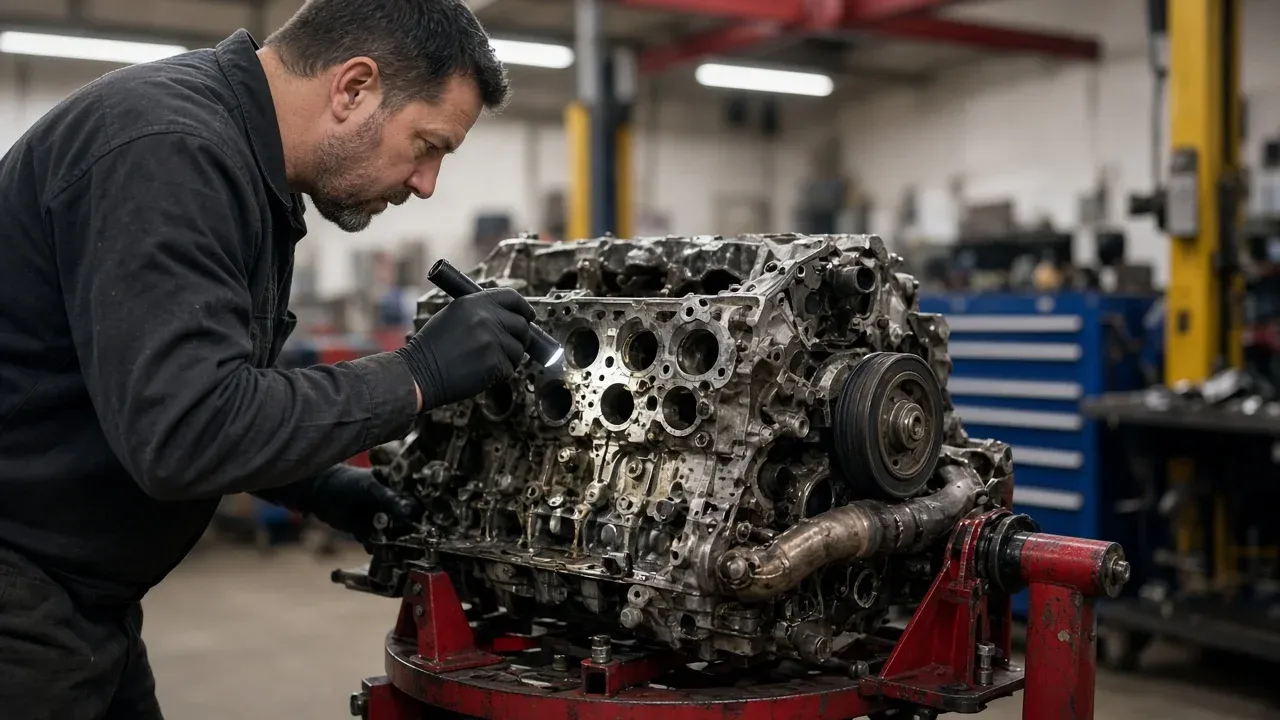
Buying a used engine is one of the best ways to get a car back on the road without paying for a new crate motor. But it only saves you money if the engine actually fits. The wrong one can sit on a pallet in your shop for weeks, cost you freight both ways, and still leave your car parked.
The good news: matching a used engine isn't guesswork. If you have your VIN, a few minutes under the hood, and a short list of questions for the seller, you can get it right the first time. This guide walks you through exactly how to do that.
Why year, make and model aren't enough
Most people start with "I need an engine for a 2016 Silverado." That's a fine place to start, but it's only half the answer.
Carmakers often offer two, three or even more engines in the same model in the same year. Look at the 2023 Chevy Silverado 1500 as an example. It came with a 2.7L turbo four-cylinder, a 5.3L V8, a 6.2L V8 and a 3.0L diesel. All four go in the same truck. None of them swap for each other.
Even engines with the same size can be different. Two 5.3L V8s from different years (or with different option codes) can use different fuel systems, sensors, wiring and computer programming. It's a common story on mechanic forums: someone installs a "same year, same size" engine, the check engine light won't stay off, and it turns out the engine came from a different trim with a different harness.
So the real goal is to match the engine code, not just the car.
Step 1: Find your VIN
Your VIN (Vehicle Identification Number) is the 17-character code that identifies your exact vehicle. You can find it in several places:
- Driver's side of the dashboard, visible through the bottom of the windshield
- Driver's door jamb sticker
- Your registration card, title or insurance card
Double-check it before you send it to anyone. A real VIN is always 17 characters and never uses the letters I, O or Q, so they can't be confused with 1 and 0. One wrong character can point to a completely different engine.
Step 2: Decode the engine from the VIN
Once you have the VIN, you need to find out which engine the factory put in the car.
For most American vehicles, including GM, Ford and Chrysler, the 8th character of the VIN is the engine code. On a GM truck, for example, an 8th digit of "D" on a 2023 Silverado 1500 points to the 5.3L V8 (RPO code L84), while a "K" points to the 2.7L turbo (L3B).
But don't assume it's always the 8th digit. Some brands put engine information in other positions, and many European and Asian brands rely on a separate engine code. A good example is this 2003 Audi A8 used engine. The 4.2L is identified by the 5th VIN digit, the 8th digit means something else, and Audi also uses a three-letter engine ID (AKB) to mark the exact build.
Two other VIN positions help here too:
- The 10th character is the model year. It matters because a carmaker may reuse the same engine letter for a different engine in another year.
- The 9th character is a check digit. It's used to catch typos, and it is not an engine code.
The easiest free tool is the NHTSA VIN decoder (vPIC) at nhtsa.gov. Enter your full VIN and it will usually show the engine size, cylinder count and sometimes the engine model. Your dealer's parts counter can also look up the exact engine from your VIN, often in a couple of minutes.
Step 3: Check the engine that's actually in your car
Here's something many buyers skip: the VIN tells you what the factory installed. It doesn't tell you what's in the car today.
If your car is older, came from an auction, or you don't know its full history, someone may have already swapped the engine. Before you order, pop the hood and look for:
- The emissions label (VECI label) under the hood. It lists the engine family and emissions certification.
- A stamped engine code or serial number on the block. Its location varies by brand. It's often near where the engine meets the transmission or on a flat pad on the front of the block.
- Casting numbers on the block or cylinder heads.
Take clear photos of these markings, plus the oil pan, intake, sensor locations and front of the engine. If the VIN and the engine don't agree, stop and figure out why before you order anything.
Step 4: Note the details that change fitment
Same engine code usually means a match. But a few build details can still change what you need. Write these down before you start shopping:
| What to check | Why it matters |
|---|---|
| Engine code / option code | Separates engines with the same size but different internals and electronics |
| 2WD, 4WD or AWD | Oil pans, mounts and front axle clearance can differ |
| Automatic or manual | Flywheel or flexplate and bellhousing setup can change |
| Federal or California emissions | Sensors, cams and catalytic setup may differ |
| Turbo, hybrid, flex-fuel or diesel | Completely different fuel and control systems |
| Production date | Some engines changed partway through a model year |
The emissions point catches a lot of people. For example, this 2009 Chevy Malibu used engine is listed as a 3.5L, VIN N (8th digit, option LZ4) with Federal emissions (option NT7). If your car was built to California emissions, check with the seller before you order, even if the engine size matches.
California drivers should also know that the state's Bureau of Automotive Repair requires a Smog Check Referee inspection after an engine change. Matching the original engine code makes that much easier to pass.
Step 5: Compare the listing with your info
Now you can shop. When you look at a used engine listing, check that it shows:
- The same year, make and model (or a confirmed interchange year)
- The same engine size and engine code, ideally with the VIN digit spelled out
- The mileage on the donor vehicle
- The condition grade and what that grade means
- The warranty and what it covers
On our site, engine listings show the engine code right in the option. On the used Chevy Silverado 1500 engines page, you'll see entries like "5.3L (VIN D, 8th digit, opt L84)" and "2.7L (VIN K, 8th digit, opt L3B)." That way, you can match your VIN's 8th digit to the right engine before you click.
For example, if your 2023 Silverado VIN has a "D" in the 8th spot, you'd look at a unit like this 2023 Silverado 1500 5.3L L84 engine. If it has a "K," you'd want the 2023 Silverado 1500 2.7L L3B engine instead. Both are 2023 Silverado 1500 engines, and they're nowhere near interchangeable.
Ford works the same way. The used Ford F-150 engines page lists options like the 5.0L (VIN 5, 8th digit) and the 3.5L turbo (VIN 4, 8th digit), so you can match your truck's VIN directly.
Step 6: Ask the seller the right questions
A listing can't tell you everything. Before you pay, call or email the seller and ask:
- Can you confirm fitment with my VIN? Any good seller will ask for it. If they don't, that's a red flag.
- What's the donor vehicle's mileage, and how was it recorded?
- Was the engine tested before it was pulled? Ask what testing was done, such as compression checks or running the engine.
- What's included? Some engines come as a long block only. Others include the intake, sensors, wiring or accessories. Know which parts you'll need to move over from your old engine.
- What does the warranty cover, and what voids it?
- What are the return rules if it doesn't fit?
Get the answers in writing, even if that's just an email.
Step 7: Understand the costs before you order
The price on the listing is only part of the total. Engine prices vary a lot by vehicle. On our site, for example, a used 2009 Malibu 3.5L is listed around $1,048 to $1,153, while a 2023 Silverado 1500 5.3L runs about $8,015 to $8,817. Beyond the engine itself, plan for:
- Freight. Engines ship on a pallet by truck. We ship free to commercial addresses in the lower 48 states, but residential delivery adds a $250 fee. Having it shipped to your repair shop usually avoids that.
- Installation labor. This is often the biggest extra cost. Get a written quote from your shop before you order, and ask how many hours they're estimating.
- Swap-over parts and fluids. Gaskets, seals, coolant, oil, filters and sometimes a water pump or timing parts.
- The cost of a wrong order. If an engine was mis-ordered, you'll usually pay freight both ways plus a restocking or handling fee. Our policy, for example, charges a 25% handling fee on returns. This is why the VIN check matters so much.
You can read the full details on our shipping policy and refund and return policy pages.
Warning signs you might have the wrong engine
Catch these before the engine goes in the car, not after:
- The listing doesn't mention an engine code, only a size like "5.3L"
- The seller never asks for your VIN
- The oil pan shape, mounts or sensor plugs look different from your old engine when you compare them side by side
- The wiring harness connectors don't line up with your car's harness
- Your VIN decoder and the old engine's markings disagree, and nobody has explained why
If you see any of these, stop. Call the seller and compare photos before anyone starts bolting things together.
What to do when the engine arrives
Once the engine shows up, a few minutes of checking can save you a lot of trouble:
- Inspect it before you sign the freight bill. Look for cracked housings, broken sensors or bent brackets. Note any damage on the delivery receipt.
- Compare it side by side with your old engine. Check the engine code, mounts, oil pan, intake and sensor locations.
- Install it on time. Most used engine warranties have a deadline. Ours requires installation within 10 business days of delivery to keep the warranty valid.
- Replace the cheap wear items while you have access, like gaskets, seals, filters and the thermostat. It's much easier to do now than later.
- Keep every receipt and note the install date and mileage for warranty purposes.
Quick checklist
Before you buy a used engine, make sure you have:
- Your full 17-character VIN, double-checked
- The engine code from a VIN decoder or dealer
- Photos of your current engine's labels and markings
- Drivetrain, transmission type and emissions type noted
- A listing that matches your engine code, not just engine size
- Seller confirmation of fitment, warranty and return rules in writing
- A shipping address and an installation quote ready
Matching a used engine takes a little homework up front, but it's the difference between a smooth swap and an expensive headache. If you're not sure which engine fits your car, browse our used engines or call our team at (800) 241-8053 with your VIN, and we'll help you confirm the right match before you order.