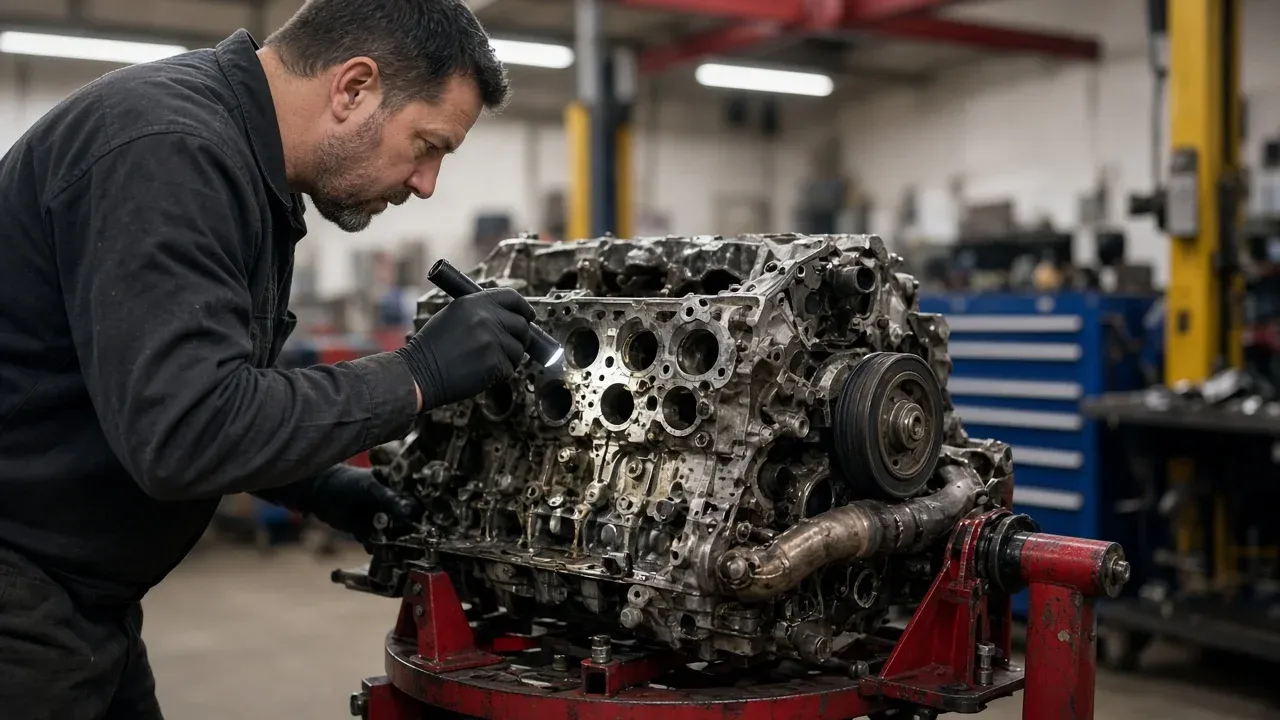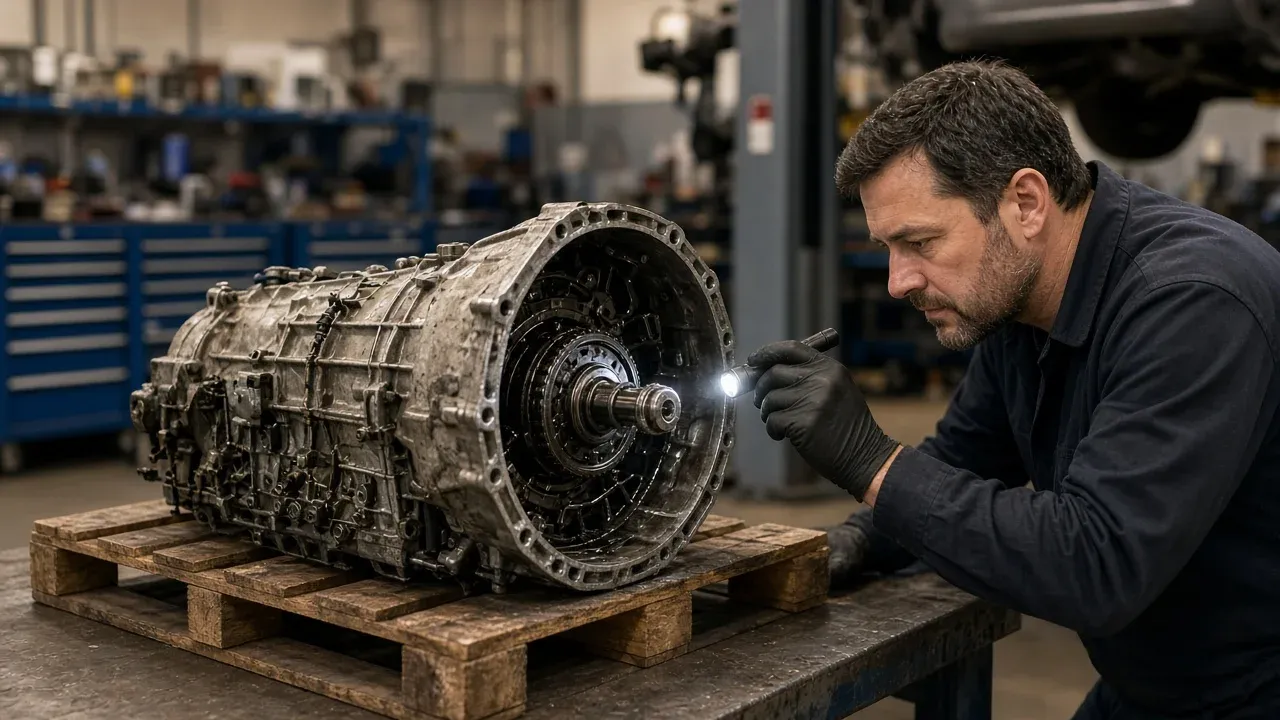
A used transmission can save you thousands compared with a new or remanufactured unit. It can also turn into an expensive mistake if you buy the wrong one, or one that was cooked before it ever left the donor car.
You usually can't road test a used transmission before you buy it. It's sitting on a pallet, not in a car. That means your checks have to be smarter: confirm it's the exact unit your vehicle needs, look for the warning signs you can see, and get the right promises from the seller in writing.
This guide walks through all of it in plain language, whether you're buying from a salvage yard, an online seller or a local shop.
Why checking matters more for transmissions
Engines and transmissions fail in different ways. A tired engine often gives clues you can see or hear. A transmission hides most of its health inside: clutch packs, bands, solenoids, the valve body and the torque converter.
Modern transmissions are also tied closely to the car's computers. Two units can look the same from the outside and still have different gear ratios, valve bodies, solenoid settings or wiring connectors. Put the wrong one in, and you can get harsh shifts, warning lights or a car that won't shift at all.
So a good check has two parts:
- Identity: Is this the exact transmission my car needs?
- Condition: Is there anything that says this unit was abused, damaged or overheated?
Get the identity right first. A perfect transmission is worthless if it doesn't fit.
Step 1: Confirm it's the right transmission
Start with your VIN
Your 17-character VIN is the best starting point. It tells a seller your exact year, model, engine and often the drivetrain. If you haven't decoded a VIN before, our guide on how to match a used engine to your car explains where to find it and how to read it. The same VIN basics apply to transmissions.
Always give the seller your full VIN, not just the year and model. A good seller will ask for it. If they don't, ask them to check it anyway.
Find the transmission code or ID tag
Most transmissions have an ID tag or a stamped code on the case. It's often near the bellhousing or on the side of the case. This code is the strongest way to confirm a match.
Real listings show why this matters. This 2014 Ford Fusion used transmission is listed for the 1.5L engine without automatic engine stop-start, with an ID of EG9P-7000-BA. A Fusion with stop-start, or with a different engine, may need a different unit even though it's the same car and year.
GM uses option codes too. This 2023 Chevy Silverado 1500 used transmission is listed as an automatic for the 4x4 5.3L, option MHT. Your truck's option codes are on the Service Parts Identification label, which is usually in the glove box or on the driver's door jamb on newer GM trucks.
Match these details, not just year and model
Before you buy, make sure the transmission matches your vehicle on every one of these points:
- Engine size: A transmission built for a 2.7L may not work behind a 5.3L, even in the same truck.
- Drivetrain: 2WD, 4WD, FWD and AWD units often have different cases, output shafts or transfer case connections.
- Transmission type: Automatic, manual, CVT or dual-clutch. Some listings spell this out, like this 2012 Nissan Murano used transmission, which is a CVT for the FWD (4x2) model.
- Option or ID code: The code on the tag or in the listing.
- Special packages: Stop-start, towing packages, police or fleet packages and hybrid systems can all change the unit.
You can see these differences on the used Chevy Silverado 1500 transmissions page, where 2023 listings are split by drivetrain and engine (4x2 with 5.3L, 2.7L or 3.0L, for example). The used Toyota Camry transmissions page goes further. Some 2023 Camry 2.5L units are listed as FWD (UB80E) and others as AWD (UB80F). Same car, same engine, different transmission.
Ask about programming
Many newer automatic transmissions need to be programmed or "relearned" after installation so the computer knows how to shift them. Some carry their own control module on or inside the case. Before you buy, ask your installer whether your vehicle needs programming or a relearn procedure, and add that cost to your budget. It's a common surprise.
Step 2: Know the seller's rules before you touch anything
This step trips up a lot of buyers, and most online checklists skip it.
Many guides tell you to drop the pan, pull the filter or take apart parts of the transmission to inspect it. On a junkyard unit you're paying cash for, that may be fine. But many sellers, including us, won't accept a return or honor a warranty on a unit that's been opened or taken apart. Our refund and return policy says that any unit that has been opened, disassembled, altered or tampered with is not eligible for a refund or exchange.
So before you inspect, ask the seller:
- Can I drain fluid or remove the pan without voiding the warranty?
- What checks are allowed before installation?
- How long do I have to report a problem?
If the answer is "don't open it," stick to the outside checks below. Let the warranty do the rest of the work for you.
Step 3: Check the outside of the case
You can learn a lot without opening anything. Use a flashlight and take your time.
Look for cracks and damage
- Bellhousing: Check the flange where it bolts to the engine. Cracks here often come from rough removal or a hard hit.
- Mounting points and bolt holes: Look for cracked bosses, stripped threads or signs of welding.
- Pan and cooler line fittings: Dents in the pan, bent lines or cracked fittings can cause leaks.
- Electrical connectors and sensors: Look for broken plastic, bent pins or cut wiring. Connectors should be intact and ideally capped or taped to keep out moisture.
Small scuffs and dirt are normal on a used unit. Cracks are not.
Check the shafts
- Input shaft: Grab it gently and feel for side-to-side play. A little movement can be normal, but heavy wobble can point to worn bushings or bearings. Look at the splines for wear or twisting.
- Output shaft: On many units you can turn it by hand. It should turn with steady resistance, not grind, catch or feel gritty.
Check the torque converter (automatics)
- Make sure the torque converter is included if the listing says it is.
- Look at the hub where it goes into the pump. It should be smooth, not deeply scored.
- When it's installed, the converter must seat fully into the transmission. If it isn't seated all the way, it can damage the pump on the first startup. This is something your installer should double-check.
Step 4: Read the fluid (if you're allowed to)
Fluid is the closest thing to a health report you'll get without a road test. If the seller allows it, or there's a dipstick or fill plug you can check without opening the unit, here's what to look for:
- Color: Healthy automatic fluid is usually red or pink. Dark brown or black fluid means it's old or overheated.
- Smell: A sharp, burnt smell is a bad sign. Heat damage inside a transmission doesn't reverse.
- Particles: Wipe some fluid on a clean white rag or paper towel. A light gray haze is normal wear. Shiny metal flakes or bits of dark friction material are not.
- Milky or pink foam: This can mean coolant got into the transmission, often from a failed cooler in the radiator. Avoid that unit.
Some newer transmissions are "sealed" and don't have a dipstick. Don't force anything open to check them. Ask the seller what testing was done instead.
Step 5: Ask the seller the right questions
Because you can't drive it first, the seller's answers matter a lot. Ask:
- What was the donor vehicle's mileage, and how was it recorded? Lower mileage is generally better, but a well-kept unit with more miles beats an abused one with fewer.
- Was the transmission tested before it was pulled? Ask what testing was done and whether there are notes.
- Was the donor vehicle wrecked? Where was the damage? A hard rear hit on a rear-wheel-drive truck or a hard front hit on a front-wheel-drive car can affect the transmission.
- Is the torque converter included? What about sensors, the control module or the cooler lines?
- What does the warranty cover, and what does it exclude?
- How much time do I have to install it?
Get the answers in writing. An email is fine.
As an example, our warranty covers the transmission case and its internal parts for two years. It doesn't cover labor, bolt-on accessories, wiring or sensors. It also requires installation within 10 business days of delivery, so don't buy a transmission months before your shop is ready for it.
Step 6: Watch for these red flags
Walk away, or at least ask hard questions, if you see any of these:
- The listing only says "automatic" or "6-speed" with no transmission code, drivetrain or engine size
- The seller won't ask for or check your VIN
- Burnt-smelling fluid, metal flakes or milky fluid
- Cracks in the bellhousing or case
- Missing torque converter when it should be included
- Cut wiring or broken connectors
- No written warranty, or a warranty nobody can explain clearly
- A price that's far below every other listing for the same unit
Step 7: Plan delivery and check it at the truck
Transmissions usually ship on a pallet by freight truck, so delivery takes a little planning.
- Ship to a business if you can. We ship free to commercial addresses in the lower 48 states. Residential delivery adds a $250 fee, so sending it straight to your repair shop is often the easiest and cheapest choice. Our shipping policy has the full details.
- Inspect it before you sign. Look for cracks, broken connectors or a damaged pallet. Write any damage on the delivery receipt before the driver leaves.
- Compare it with your old transmission. Check the ID tag, mounting points, connectors and cooler line fittings side by side.
Step 8: Protect it during installation
A good used transmission can still fail early if the install is rushed. Talk with your installer about these:
- Flush or replace the transmission cooler and lines. Debris from your old, failed transmission can sit in the cooler and get pushed straight into the replacement. This is one of the most common reasons a "new" used transmission fails early.
- Use the exact fluid your vehicle calls for. The wrong fluid can cause shifting problems and may void your warranty.
- Fill it correctly. Many modern transmissions have a specific fill and check procedure at a set fluid temperature.
- Complete any programming or relearn the vehicle needs.
- Keep your receipts for parts, fluid and labor in case you need to file a warranty claim.
Quick checklist before you buy
- Full VIN sent to the seller and fitment confirmed
- Transmission code, drivetrain and engine size match your vehicle
- Programming needs checked with your installer
- Seller's rules on opening the unit understood
- Case, bellhousing, shafts and connectors inspected
- Fluid checked, if allowed
- Donor mileage, testing and warranty terms in writing
- Delivery address and installer ready within the warranty window
If you're shopping now, browse our used transmissions or call (800) 241-8053 with your VIN. We'll help you confirm the right unit before you order, so the only surprise is how smoothly it shifts.