A used engine can save you thousands compared with a new crate motor, but only if the one you buy actually fits, actually runs, and comes with terms you can live with. Most bad used-engine purchases don't fail because the engine was junk. They fail because the buyer ordered the wrong variant, couldn't prove where it came from, or voided the warranty in the first week.
This guide walks through what to check before you pay, in the order that saves you the most time: fitment first, then the donor vehicle, then the engine itself, then the paperwork. If you're buying online and can't put your hands on the engine, we'll cover what to ask for instead.
The short version
Before you buy any used engine, make sure you can answer yes to all of these:
- The engine code matches your vehicle's VIN, not just the year, make and model.
- You know the approximate donor mileage and roughly why the donor car was taken off the road.
- The seller can tell you how the engine was tested, and ideally share the results.
- There are no cracks, broken mounts, or signs of overheating, flooding or heavy sludge.
- You know exactly what's included (long block, complete engine, accessories or not).
- You've read the actual warranty and return terms, including what voids them.
The rest of this guide explains each point and what a "no" should mean for your decision.
1. Start with fitment, not price
The single most common used-engine mistake is buying an engine that looks right but isn't. Two engines from the same model year can have different displacements, different emissions equipment, different sensors, or a hybrid versus non-hybrid design.
Here's a real example from our own inventory. A 2017 Toyota RAV4 2.5L engine listed with a VIN J code (2ARFXE, hybrid) sits right next to 2017 RAV4 engines listed with a VIN F code (2ARFE, non-hybrid). Same year, same model, same 2.5L displacement, but they are not interchangeable. If you ordered on "2017 RAV4 2.5L" alone, you'd have a coin-flip chance of getting the wrong one.
To avoid that:
- Read the engine code from your VIN. Depending on the manufacturer it's usually the 8th digit (most domestic brands, and many others) or a different position such as the 5th digit on some Toyota models. The listing should say which digit it's using.
- Check the engine's own ID if you can: a label on the block or a stamped code.
- Compare drivetrain details that affect the engine, such as 2WD versus AWD, turbo versus naturally aspirated, and emissions version (for example, federal versus California or PZEV).
We cover the step-by-step VIN process in our guide on how to match a used engine to your car using the VIN and engine code. If you're unsure, give the seller your full 17-digit VIN and let them confirm the match in writing before you order. Under our refund and return policy, we guarantee the part fits the vehicle as described at the time of sale, which is exactly why getting the description right matters.
2. Find out where the engine came from
A used engine's history is really the donor vehicle's history. A good seller should be able to tell you at least the approximate mileage and, where known, how the vehicle ended up being parted out.
Questions worth asking:
- What was the mileage on the donor vehicle? (Expect an approximate figure or range, not a guarantee.)
- Was the donor in a collision, a flood, or retired for a mechanical problem?
- How long was the engine stored after removal, and was it stored indoors?
- Is any maintenance history available?
What the answers tell you:
- A rear-end or side collision is often the best-case story. The engine was running when the car was totaled.
- A heavy front-end hit is worth a closer look at the mounts, oil pan, timing cover and accessory brackets.
- A flood vehicle is a hard pass for most buyers. Water can reach the intake, cylinders and oil, and corrosion often isn't visible from the outside.
- A vehicle retired for "engine problems" is obviously a red flag unless the seller can explain what was wrong and how it was ruled out.
On mileage, be realistic. Mileage on a used engine comes from the donor vehicle and is usually stated to the best of the seller's knowledge. Our listings show a mileage range for each unit, for example a 2022 Nissan Altima 2.5L engine with about 47,000 to 54,000 miles on the donor, and our policy is clear that mileage is not guaranteed. Treat mileage as one input, not the whole story.
3. Inspect the outside of the engine
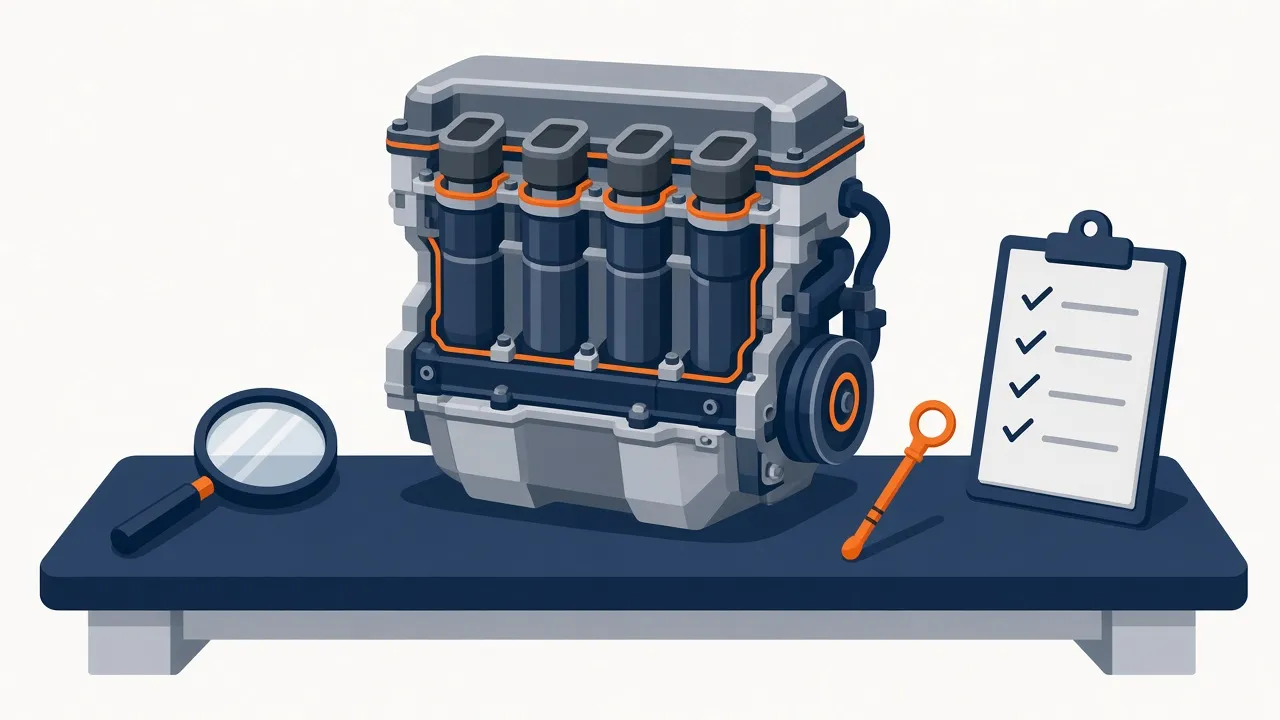
Whether you're standing in front of it or looking at photos, the exterior tells you a lot. Ask for clear photos of every side if you can't see it in person.
Look for:
- Cracks in the block, heads or oil pan, especially around mounting points and the bellhousing area.
- Broken or bent mount ears and accessory brackets, which suggest a hard impact.
- Wet, fresh oil or coolant leaks. Old dried grime is normal on a used engine. Active seepage at the valve cover, rear main seal or timing cover means a gasket job you'll be paying for.
- Heat discoloration or melted plastic, which can point to overheating or a fire.
- Rust lines, mud or silt in crevices, which can point to flood exposure.
- Missing or damaged sensors and connectors. These are usually cheap, but you need to know what you'll be replacing.
Cosmetic condition on its own isn't a reason to reject an engine. Used engines are rarely clean, and most sellers, including us, don't guarantee cosmetic appearance. You're looking for damage, not dirt.
4. Check the oil and coolant if you can
If you can access the engine, fluids are one of the fastest health checks.
- Pull the dipstick. Dark oil is normal. Milky, light-brown or foamy oil can mean coolant has mixed with the oil, which often points to a failed head gasket or a crack.
- Rub a little oil between your fingers in daylight. A fine metallic glitter suggests bearing or internal wear.
- Look under the oil fill cap. A light film is fine. Thick sludge means the previous owner likely skipped oil changes for a long time.
- If coolant is still in the engine, look for an oily film on top or brown gunk, which can mean oil is getting into the cooling system.
When you buy online you usually can't do these checks yourself before purchase. That's where the seller's testing process and the warranty become your protection, so ask about both.
5. Ask how the engine was tested
You can't see inside a used engine, but you can ask how the seller checked it. Common tests include:
- A running test or video of the engine running in the donor vehicle, listening for knocks, ticking, rough idle or smoke.
- A compression test, which measures how well each cylinder seals.
- A leak-down test, which shows where pressure is escaping (intake valve, exhaust valve, rings or into the cooling system).
- Turning the crankshaft by hand, which should be smooth with even resistance and no grinding or hard catches.
With compression results, the spread between cylinders matters more than the single highest number. Many technicians treat readings within roughly 10 percent of each other as normal, but your engine's factory service manual is the real spec. If a seller can't say how an engine was tested, or won't share anything beyond "it's good," treat that as a warning sign.
At State Auto Parts, every engine is inspected and graded before it's listed, and the grade shows on the listing. You'll see Grade A and Grade B units for the same model, often at different prices, so you can weigh condition against budget.
6. Know exactly what you're buying
"Used engine" doesn't mean the same thing everywhere. Before you compare prices, confirm what's in the crate:
- Long block: block, rotating assembly and cylinder heads, usually without most bolt-on parts.
- Complete engine: may include intake, some sensors, and other bolt-ons, depending on the seller.
- Accessories such as the alternator, A/C compressor, starter or power steering pump may or may not be included, and are often excluded from warranty coverage.
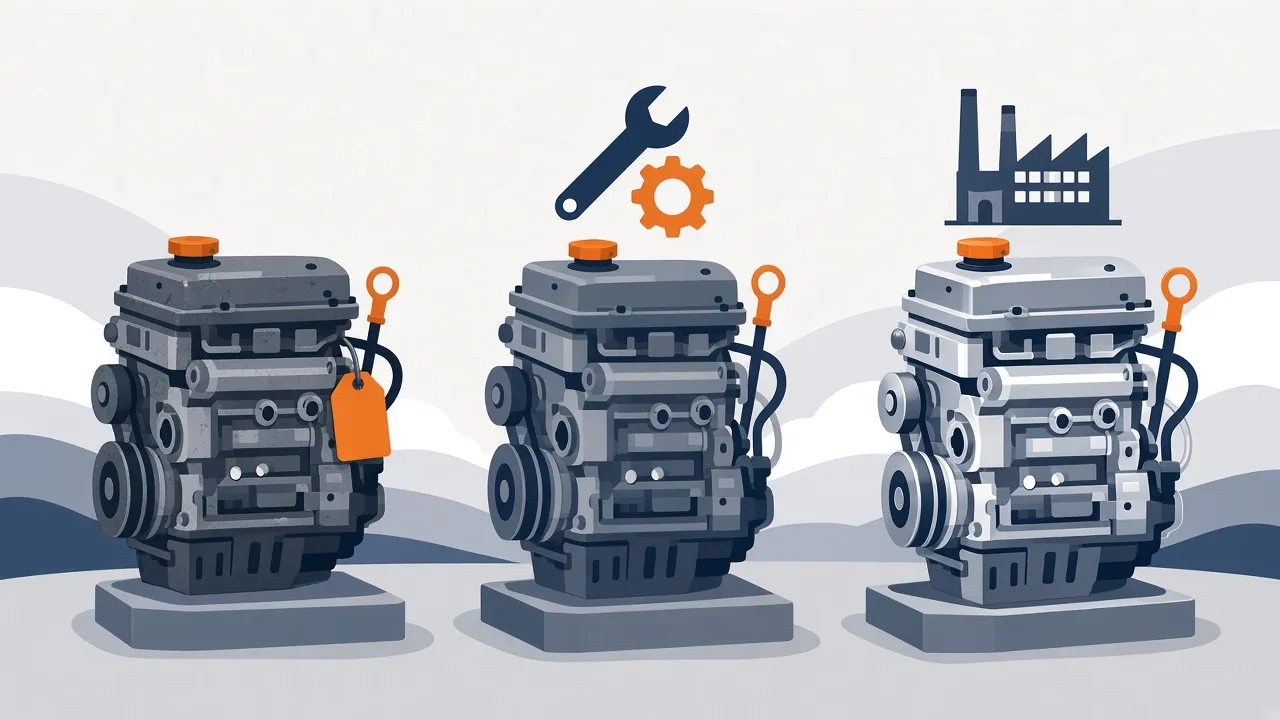
A cheaper quote that excludes parts you'll have to transfer or buy separately may not be cheaper at all. If you want to understand how a used engine compares with rebuilt and remanufactured options, the definitions and trade-offs are worth knowing before you shop.
7. Read the warranty like you'll need it
Warranty length is the headline, but the conditions decide whether it actually helps you. Look for:
- What's covered: usually internal parts of the core engine, not bolt-on accessories, sensors or wiring.
- Labor: most used-engine warranties, ours included, don't reimburse installation labor, towing, rental cars or diagnostic time.
- Installation deadline: our 2-year limited warranty requires the engine to be installed within 10 business days of delivery unless agreed otherwise in writing.
- Installer requirements: a qualified technician following OEM procedures.
- Maintenance records: you may be asked to show that fluids and filters were serviced on schedule.
- Disassembly: opening up the engine before a claim, or removing its ID numbers, typically voids coverage.
That last point matters for buyers who want to inspect internals themselves. Under our return policy, a unit that's been opened, disassembled or tampered with isn't eligible for refund or exchange, so do your checks from the outside and rely on test results and the warranty for the inside.
8. Don't forget delivery and returns
A used engine is freight, and the delivery details can change your total cost:
- Delivery address: we ship free to commercial addresses in the continental U.S. A residential delivery adds a $250 fee, so many buyers ship straight to their repair shop. Full details are on our shipping policy.
- Liftgate: if nobody has a forklift, request a liftgate at checkout.
- Inspect on arrival: check the crate and engine before signing the freight bill, and note any visible damage with the carrier then and there.
- Return window and fees: our returns need written authorization within 30 days of delivery and carry a 25% handling fee plus freight both ways, so it pays to confirm fitment before ordering rather than after.
- Core charge: some sellers add a refundable deposit you only get back by returning your old engine. We don't require a core deposit.
Red flags that should make you walk away
- The seller won't confirm fitment against your VIN.
- No information at all about donor mileage or why the vehicle was parted out.
- Evidence of flood exposure, a cracked block or broken mounts.
- Milky oil, heavy sludge or metal particles in the oil.
- A crank that won't turn or catches as it rotates.
- No written warranty, or a warranty with conditions you can't realistically meet.
- A price far below comparable listings with no explanation.
A quick pre-purchase checklist
- Full 17-digit VIN in hand and engine code identified
- Seller confirmed the match in writing
- Donor mileage range and history noted
- Exterior photos reviewed for cracks, leaks and impact damage
- Testing method and grade confirmed
- Included parts listed
- Warranty and return terms read, including install deadline
- Delivery address, liftgate and inspection plan sorted
- Installer booked so the engine goes in on time
Where to start
If you already know your engine code, browse all used engines for sale or go straight to a model page such as used Toyota RAV4 engines or used Honda CR-V engines, where each listing shows the option code, mileage range, grade and price. If you're not sure which engine your vehicle needs, call (800) 241-8053 with your VIN and we'll help you confirm the match before you order.
If you're replacing the transmission at the same time, our guide on how to check a used transmission before you buy covers the same process for gearboxes.